
Verb Tense
Today, I will use appropriate verb tenses (correct verb tenses) in my writing.
📒 Verb Tense Notes
Verbs come in three tenses. The tense of a verb tells when the action takes place.
⏪ Past⏺️ Present⏩ Future
⚠️ All tenses must always stay the same in a sentence!
⏪ Past Tense

- Tells about actions that have already happened.
- Most verbs form the past tense by adding d or ed to the base form of the verb.
Examples:
I walked to school yesterday.
The students discussed the assignment.
I walked to school yesterday.
The students discussed the assignment.
⏺️ Present Tense

- Tells about actions that are happening in the present.
- The present tense of the verb is the base form.
- When the subject is a singular noun or he, she, it, you usually add s to the verb.
Examples:
I walk to school.
The students discuss the assignment.
She practices her violin for hours before the concert.
I walk to school.
The students discuss the assignment.
She practices her violin for hours before the concert.
⏩ Future Tense
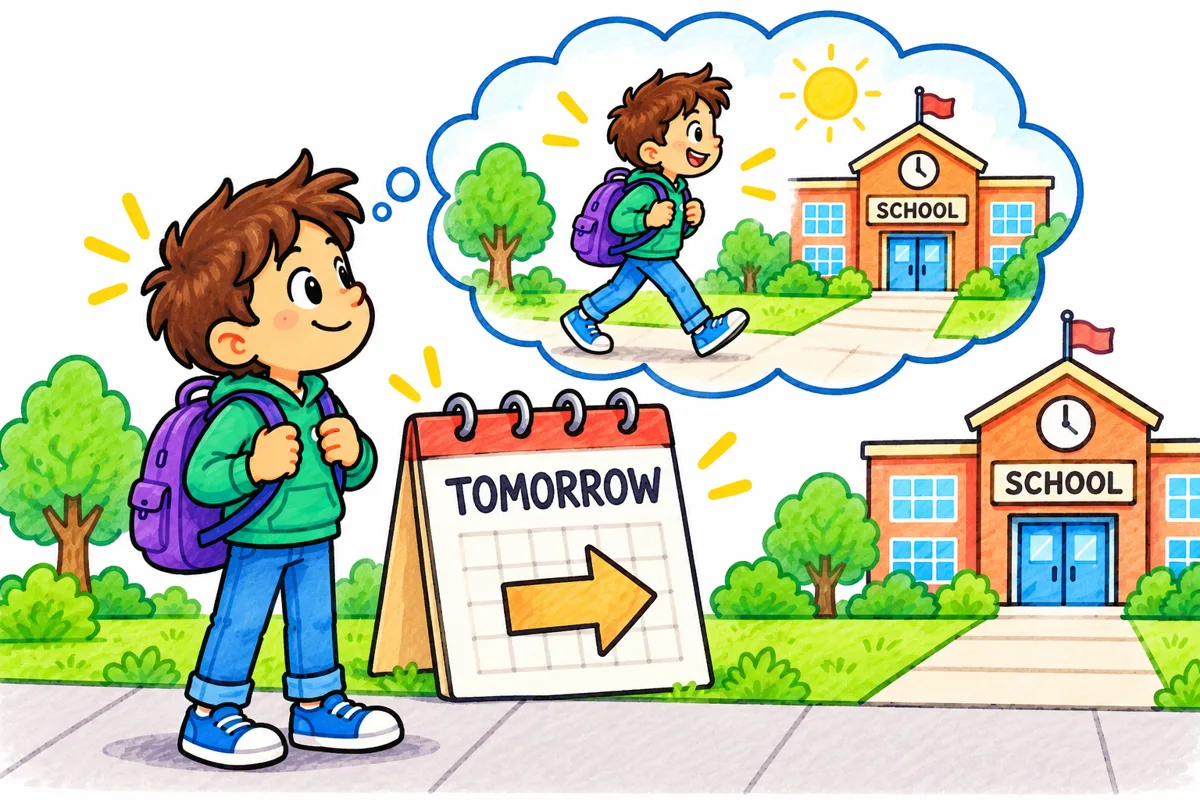
- Tells about actions that have yet to happen.
- Form the future tense by adding the helping verb will or shall to the base form of the verb.
Examples:
I will walk to school tomorrow.
The students shall discuss the assignment.
I will walk to school tomorrow.
The students shall discuss the assignment.
⭐ Verbs to Know

Was = I · singular (past)
I was excited to go to school.
I was excited to go to school.
Were = plural (past)
They were excited to go to school.
They were excited to go to school.
Is = singular (present)
The kitten is hungry.
The kitten is hungry.
Are = plural (present)
The kittens are hungry.
The kittens are hungry.
Remember: I is singular, but it uses am and was.
📱 Check for Understanding
❤️
🤍💬📤
✏️ Verb Tense Practice
Read each sentence carefully and complete the tasks. Press Check at the bottom of each part.